
How to Choose the Right Construction Company in Vallejo
Here’s the test we’d suggest every homeowner run before hiring anyone: ask the contractor who handles the work their crew doesn’t do. If your roofer, your driveway crew, and your interior remodeler have never spoken to each other, you’re the project manager – and you probably didn’t sign up for that job. Choosing the right construction company in Vallejo means choosing one that thinks about your whole property, not just the slice they’re getting paid for. If you’d rather not spend your evenings refereeing between trades, call (844) 684-1772.
What does contractor fragmentation actually cost you in Vallejo?
More than most people realize, and rarely in ways that show up on a single invoice. When a bathroom remodel and a roof replacement run at the same time under two different companies, the gaps between them become your problem. The roofer finishes and leaves debris on the driveway the paving crew is about to work on. The interior team needs to open a wall, but nobody confirmed what the exterior crew ran through it.
Here’s where the money goes in a fragmented project:
- Change orders at the seams. Each trade prices its work assuming the next one will handle the awkward transitions. When they don’t, someone charges you to fix it.
- Schedule drift. Two contractors with no shared calendar means one waits on the other for days or weeks. Vallejo’s permitting timeline already takes time; you don’t need idle crews on top of it.
- Warranty confusion. A window leaks, and the window installer says the trim was wrong while the trim carpenter says the window was set badly. You’re the one stuck in the middle.
- Material mismatches. One crew picks fixtures that don’t coordinate with the flooring another crew installed. Nobody notices until everything is in.
None of this is a knock on individual tradespeople. Most of them do good work. The problem is structural: nobody owns the whole picture.
What licenses and classifications should a full-scope contractor in California hold?
In California, a legitimate full-scope residential contractor holds a Class B General Building Contractor license from the Contractors State License Board (CSLB), and that classification matters more than most homeowners realize. A Class B license allows the holder to take a prime contract on work involving two or more unrelated trades. That’s exactly the scenario we’re describing: a job that spans roofing, paving, and cabinetry.
Here’s how to verify any contractor in Vallejo:
- Look up the license number on the CSLB website. Don’t rely on a number printed on a business card – check it yourself.
- Confirm the license is active and the classification matches your project. Specialty licenses (C-39 for roofing, C-27 for landscaping, C-36 for plumbing) exist for single-trade work – those contractors shouldn’t be taking on your whole property.
- Check that workers’ compensation and liability insurance are on file. A license alone doesn’t cover you if a worker is injured on your property.
- Ask whether the company carries both general liability and workers’ comp, and get a certificate showing your address. Not a copy from last year.
A contractor who’s genuinely set up for full-scope residential work will have this information ready. If verifying the license feels like pulling teeth, that’s your answer.
Why should material specification be part of how you vet a contractor?
Because it’s one of the few promises you can actually check. A contractor who says “we specify GAF or CertainTeed roofing” has made a claim that’s traceable on a purchase order and enforceable if the wrong product shows up in your driveway. A contractor who says “we use quality materials” has said nothing at all.
When we look at a material list, here’s what a specified name-brand product tells you:
- The manufacturer publishes installation standards, and certified installers are held to them.
- Warranties are tied to product and installation – meaning there’s an actual warranty to enforce.
- Specification implies a track record. Brands like GAF, Owens Corning, and IKO have been around long enough that their failure modes are known and documented.
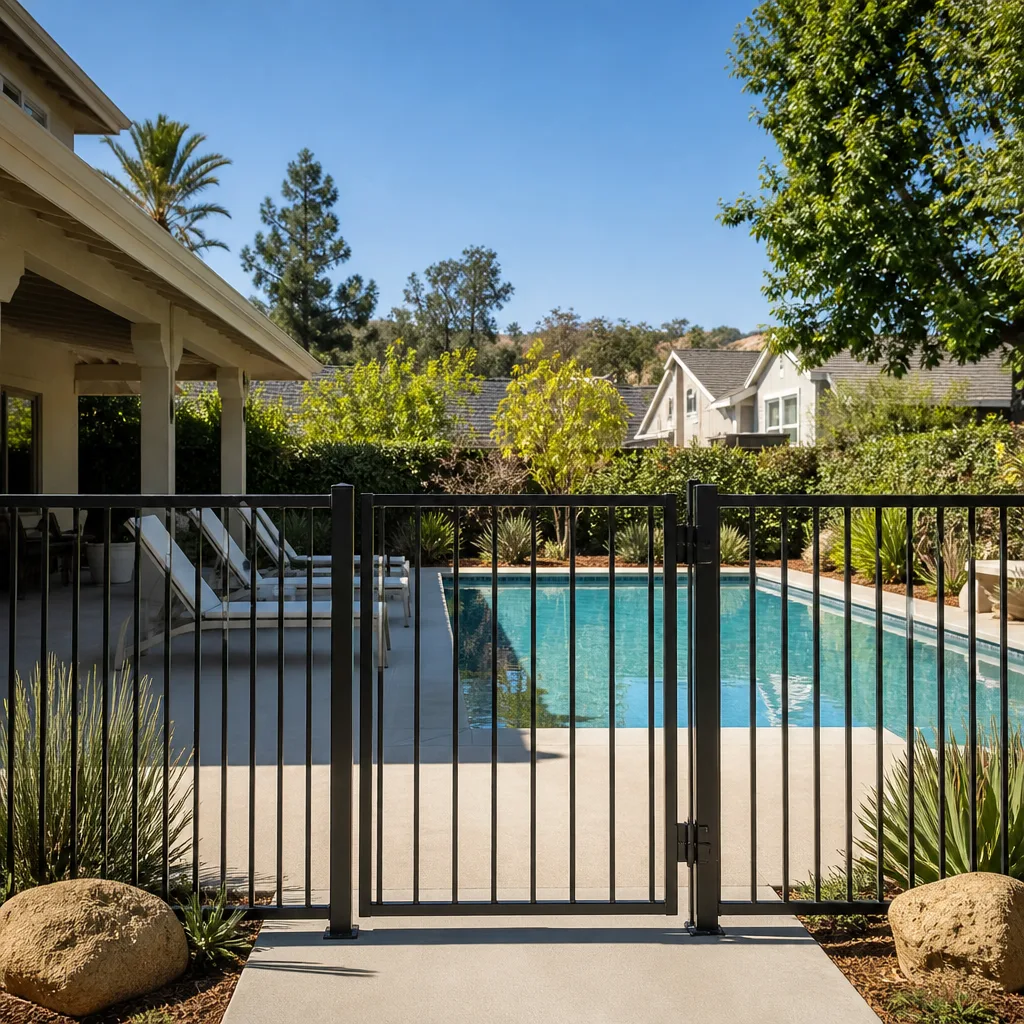
The same principle applies across every trade. A fence built from Ameristar, Jerith, or Bufftech aluminum and vinyl is a fence whose warranty you can actually look up. A countertop surfaced in Cambria or Silestone is a surface with a documented care profile. When a contractor names brands across every category they work in, they’re telling you something about how they think. It’s the difference between a checkbox and a commitment.
Ask for a written line-item material list with brand and product names before work starts. If a contractor can’t produce one, they’re building from memory.
How do you test whether a contractor thinks about your whole property?
Ask one question and listen: “What else on this property should we be thinking about while you’re here?” A contractor who only sees their slice will answer that question narrowly. A full-scope contractor will walk your driveway, look at your roof, notice the fence line, and tell you what they see. Not as an upsell – as a matter of course, because that’s how they’re built to work.
The first conversation should cover:
- Scope boundaries. What’s included, what’s excluded, and what happens if something unexpected turns up mid-project? A written line-item quote, not a lump-sum estimate, tells you the contractor has actually thought this through.
- How permits work. In Vallejo, most structural work (additions, ADUs, significant remodels) requires a permit from the city’s building division. Ask who pulls it. Ask who’s on site for the inspection. If the answer is vague, that’s a red flag.
- Sequencing. If you’re doing a kitchen remodel and an ADU in the same year, how does the contractor handle the overlap? A single-source contractor can schedule this; a trade-specific one can’t.
- What they specify. Ask for two or three brand names in every category you’re touching. A real answer, not a category, is the signal you’re looking for.
The practical test isn’t whether they’re a perfect fit for your project today. It’s whether they can see your property as a whole thing. If they can’t, you’ll be the one filling the gaps.
What should Vallejo homeowners ask about local project experience?
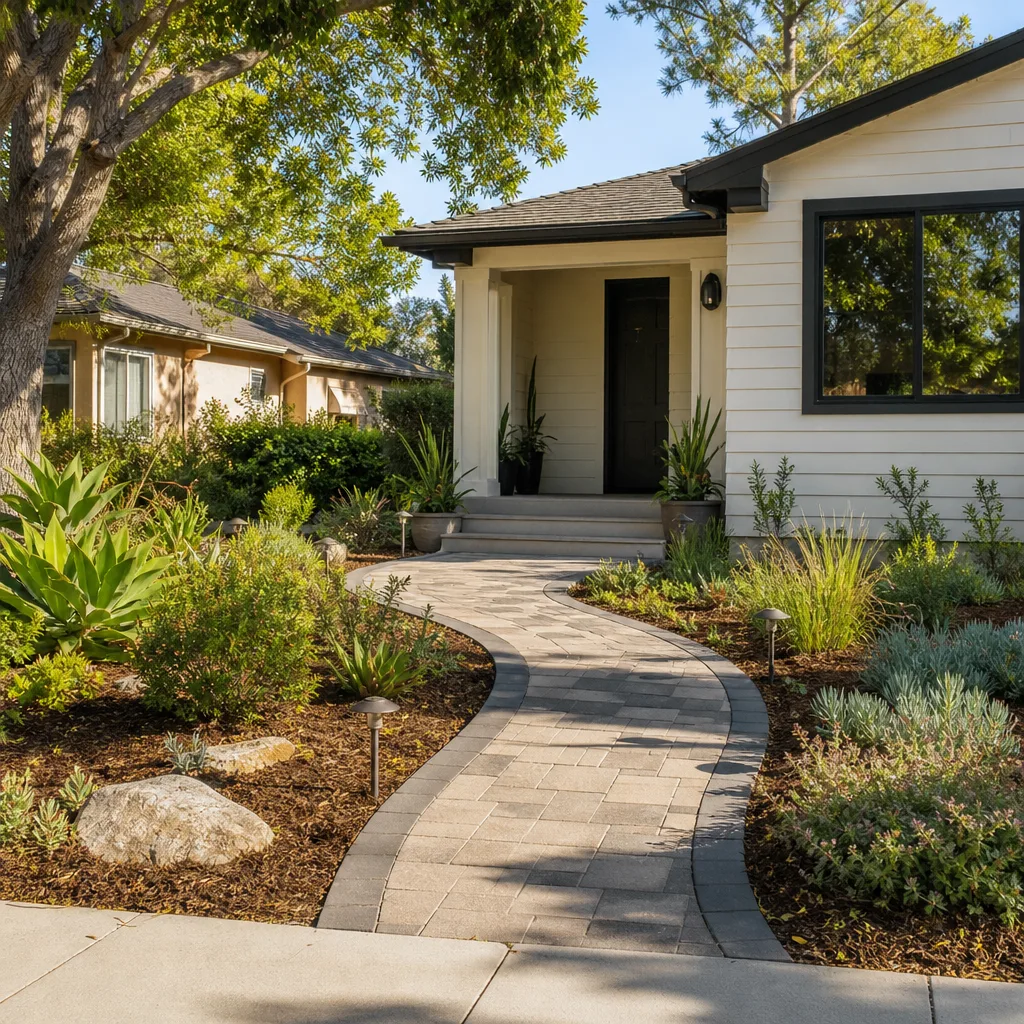
Vallejo’s housing stock spans a wide range – bungalows and Victorians on the older streets, mid-century ranch homes, and newer construction in the hills. Each era brings its own quirks. You want a contractor who has seen them.
Specific questions to ask:
- What soil types have you dealt with in Vallejo? Expansive clay soils are common in parts of the East Bay, and they affect how driveways are base-built, how footings are poured, and how pavers are laid. A contractor who’s never thought about soil is a contractor who’s going to pour a slab that cracks in two seasons.
- How many of your projects have gone through Vallejo’s building division? Familiarity with the city’s permit process reduces the back-and-forth on plan checks and inspections.
- Have you worked on homes from this era before? If your house is older, ask what you might expect to find behind the walls – outdated wiring, older plumbing, or finishes that need to be matched rather than replaced.
- Can you walk me through a typical project in this neighborhood? A general answer, not a named job or customer, will tell you whether the contractor has actually spent time on properties like yours.
None of these questions are invasive. A contractor with real local experience will answer them comfortably. The ones who can’t probably haven’t done the work.
When should you call a pro instead of coordinating it yourself?
Now. If you’re already keeping three contractors on a group text thread, you’ve hit the point where the coordination is costing you more than a single-source contractor would. We see this most often on properties where a kitchen remodel, a driveway replacement, and an ADU happen within a year or two of each other – projects that share a property but not a plan.
It’s also the moment to call if you’re staring at a project that crosses trades. A bathroom remodel that touches plumbing, electrical, tile, and cabinetry is a natural place to consolidate. A roof replacement that also needs gutters, fascia, and a new fence line is another. Our technicians have up to 15 years of experience and see these overlaps as the norm, not the exception.
If you’re exploring the full-property approach, the related services in Vallejo that most often need a single scope include driveway & pavers and fence installation, both of which are classic “second contractor” projects that go smoother when the same team handles the planning. If your project is bigger – an addition, an ADU, or a full interior remodel – start with home additions & ADU to see how the scope works.
If you’re still comparing options, the main page at Construction Vallejo lays out the full scope of what we handle.
The Bottom Line
Choosing a construction company in Vallejo comes down to three things: whether they hold the right license classification for your whole project, whether they specify name-brand materials you can verify on the invoice, and whether they think about your property as a single system rather than a set of unrelated jobs. Any one of those alone isn’t enough. All three together is what a genuine full-scope residential contractor looks like.
The fragmented approach isn’t wrong – lots of homeowners have done it successfully. But it costs you time, attention, and the change orders that happen at the edges. If you’re weighing your options, we’re happy to talk through the scope of your project. Construction Vallejo offers free estimates – call (844) 684-1772. We answer 24/7. Fast dispatch from 7am to 7pm, Sunday through Friday.
Frequently Asked Questions
Go to the Contractors State License Board (CSLB) website and look up the license number directly. Confirm it’s active, that the classification (such as Class B General Building) matches your project scope, and that insurance is on file. Don’t rely on a printed business card. Call (844) 684-1772 to schedule a free estimate with a team that can walk you through this.
Pricing varies too much by scope to give a single number – a driveway replacement and a kitchen remodel aren’t comparable projects. The important thing is to insist on a written line-item estimate that itemizes materials, labor, and permit costs before you sign. That’s what makes the project price-controllable. Call (844) 684-1772 for a free estimate – we’ll give you line items, not a lump sum.
Yes. Most structural work, additions, and ADUs require a permit from the city’s building division, and the contractor handling the scope should handle the permit. Ask this question directly of any contractor you’re considering – the answer should be clear and immediate. Call (844) 684-1772 to talk through the permit process for your specific project.
It shouldn’t, and a properly scoped line-item estimate is what protects you from surprise change orders. Mid-project changes are sometimes unavoidable – unexpected conditions behind walls or under a slab – but they should be documented and discussed before work continues, not added to the final invoice. Call (844) 684-1772 to get a written estimate that sets the price before work begins.
Written by the team at Construction Vallejo.
Need Construction Help?
Call Construction Vallejo - licensed & insured, here with fast help in Vallejo.
(844) 684-1772