Last updated November 18, 2026






Free written scope consultation - allowances, timeline, and change-order rules on paper before a single trade is scheduled
Construction Warning Signs: A Vallejo Homeowner’s Reference Guide
A hairline crack running diagonally from the corner of a window frame isn’t a cosmetic issue. It’s often the first visible signal of differential foundation movement, and in Vallejo’s clay-heavy soils, that movement is more common and faster-moving than most homeowners realize until a drainage fix has turned into a foundation repair. Most warning-sign guides tell you what failure looks like. By then, you’re already paying for a repair instead of a prevention. This guide is built the other way around: it’s about the precursor patterns that show up six to eighteen months before structural or material failure, when intervention is still cheap. We’ll walk through cracks, roof stains, driveway edges, siding, and the interior clues most people write off as wear. If you’re in Vallejo and something on this list looks familiar, that’s exactly the right time to read it.
Quick Answer
The earliest construction warning signs in a Vallejo home usually show up as pattern cracks near windows and doors, staining on ceilings or in the attic, lifting or hollow-sounding driveway edges, paint failures on wood trim, and doors that suddenly stick. None of these mean your house is falling down. All of them mean the underlying cause – soil movement, drainage, flashing, base failure, or moisture intrusion – is cheaper to fix now than after the finish work fails. The pattern matters more than the crack.
Styles & brands we work with
- Kitchen remodeling
- Bathroom remodeling
- Home additions & ADU
- Roofing
- Windows & doors
- Driveway & pavers
- Fence
Table of Contents
- How to Tell Settling Cracks From Structural Movement Cracks
- Roof Warning Signs That Show Up Inside the Home First
- Driveway and Paver Warning Signs: Base Versus Surface
- Exterior Siding and Trim: Moisture Behind the Surface
- Interior Clues Most Homeowners Blame on Wear
- Why Vallejo’s Soil and Weather Accelerate These Patterns
- What Order to Fix Things In
- How to Read the Pattern Before You Call Anyone
How to Tell Settling Cracks From Structural Movement Cracks
Almost every crack in a home has a category, and the category tells you what to do. The mistake most Vallejo homeowners make is judging a crack by its width alone. Width matters, but the pattern, angle, and location tell you far more. A quarter-inch crack running straight through a slab is often less concerning than an eighth-inch diagonal crack that fans out from the corner of a window.
Start with the shape:
- Vertical cracks in a foundation wall or slab are usually shrinkage or ordinary settling. They tend to be stable once they’ve formed.
- Diagonal cracks that run from the corner of a window or door toward the ceiling or floor are the most common structural movement signature. They follow the load path and the weakest point in the wall.
- Stair-step cracks in brick or block follow the mortar joints and almost always indicate differential movement – one part of the foundation is going down or up faster than another.
- Horizontal cracks in a foundation wall, especially with any bowing, are the most serious. That’s a lateral load problem, not settling.
Now compare two ends of the same crack. If one side is higher than the other – even by a sixteenth of an inch – that’s differential movement, not shrinkage. Run a pencil line across the crack, date it, and check it again in 60 days. A crack that hasn’t moved in two months is a monitoring item. A crack that has widened or lengthened is a call-the-contractor item.
The locations to check most often in Vallejo’s older wood-frame homes:
- Corners of window and door openings on the first and second floors
- The line where an addition meets the original structure
- Garage-to-house transitions, where different foundations often carry different loads
- Along the top of the foundation stem wall, especially on the downhill side
Cracks that pop through the drywall in a clean line, with no crushing or separation, are usually cosmetic. Cracks that crush the drywall, separate the window frame from the wall, or come with a door that suddenly won’t close are the ones that need a structural look before anything gets patched. We’ve seen plenty of Vallejo homes where the crack was patched twice before anyone checked the soil and drainage behind it – and that’s the pattern we want to help you avoid.
Roof Warning Signs That Show Up Inside the Home First
By the time you see a stain on a ceiling, the roof has usually been leaking for a while. Water takes the slow path through decking, insulation, and drywall before it shows up in the room you’re standing in. That’s why the inside of the house is a better early-warning system than the roof itself. Here’s how to read what you’re seeing.
The stain shape tells you where the problem is
- A round, brownish ring (“coffee ring” shape) on a ceiling usually means water has been reaching that spot repeatedly and the drywall is absorbing and evaporating. It’s a slow, chronic leak – most often flashing, not shingle failure.
- A vertical streak or drip line running down a wall is usually water traveling along a rafter or stud from a higher entry point. Look up and to the side, not directly above.
- A dark stain at a wall-to-ceiling joint is often flashing at a wall intersection, a chimney, or a roof-to-porch transition. Shingle faces rarely leak at the interior wall corner directly above them.
- A soft spot or bubbling paint on a ceiling means the drywall has lost integrity. That’s advanced – the leak has been there long enough to do real damage.
The attic is where you get your six-month head start
Get into the attic with a flashlight after the first rain of the season, before anything reaches the interior. Look for:
- Water staining on the underside of the roof decking – dark streaks, tide lines, or whitish staining on wood sheathing.
- Rusty nails or nail staining poking through the roof deck, which tells you moisture has been in contact with the hardware repeatedly.
- Matte or clumped insulation near a wall or chimney penetration, which means water is running down and soaking in.
- Daylight showing at a penetration – vent, chimney, or skylight flashing – which is where most leaks actually enter.
- Condensation on the underside of nails or on ducts – that’s often an attic ventilation problem, not a leak. It’s still worth addressing because chronic moisture shortens the roof’s life.
The important distinction: interior stains above a flat ceiling field often point to shingle or underlayment failure. Interior stains along a wall edge, chimney, skylight, or where two roof planes meet are almost always flashing. Stains that show up only during wind-driven rain point to flashing or penetrations too, because the angle of the rain finds the gaps. Roofing systems from GAF, CertainTeed, and Owens Corning are only as good as the flashing work around them – which is exactly why we specify the whole assembly, not just the shingles.
If you’re seeing any of this and haven’t had the roof looked at, that’s the right time. A roof inspection before the next rainy season costs far less than the drywall, insulation, and fascia repair that comes after a leak gets a full winter to work. If you want the roof evaluated as a full system – decking, underlayment, flashing, and the shingles on top – see Construction Vallejo for how we approach that. It’s the same reason we push back when a homeowner asks to “just replace the shingles” after seeing a stain: the shingles usually weren’t the problem.
Driveway and Paver Warning Signs: Base Versus Surface
A driveway that is 90% intact and starting to fail in one area is not a surface problem. It’s a base problem. Vallejo’s clay soils expand and contract with the wet and dry seasons, and a driveway built on a base that isn’t compacted and drained correctly will telegraph that movement upward within a couple of seasons. The surface look tells you which problem you’re actually dealing with.
- Edge lifting or drop-off at the border – the outer edge of the driveway is rising or sinking relative to the soil or the curb. Base erosion or inadequate edge restraint.
- A hollow sound when you tap the pavers – voids underneath. Water has moved the bedding sand out from under the surface. Base issue.
- Interior depressions – water pooling in one spot in the middle of the driveway, not at the edge. That’s subgrade settlement under the paver field.
- Joint widening between pavers – joints that used to be tight are now visible bands. Usually means the pavers are moving apart under load, which traces back to the base.
- Efflorescence – a white, powdery bloom on the paver face. It’s salt migrating from the base and bedding materials to the surface as water moves through. If it keeps returning after cleaning, water is moving under and up through the driveway, which is a base drainage problem, not a surface stain.
- Rutting in the tire tracks – the base can’t carry the load. Concrete overlays and surface seals don’t fix it.
Sampling versus guessing
The useful test is the pattern, not the individual symptom. A single low paver is often a reset. A field of pavers that’s level in the middle but dropping along one edge is almost always drainage on that side of the driveway. A driveway that “turtles” (rises in the middle and slopes down to the edges) is a base compaction problem that a re-set of pavers will not fix.
The biggest mistake is sealing or coating a driveway that’s already showing base movement. Sealer traps moisture and hides the joint and edge clues you need to read. If you want a professional read on the base layer before you spend money on a surface repair, our driveway & pavers work is built around specifying pavers from Belgard, Unilock, Techo-Bloc, Tremron, and Cambridge Pavers over a base that’s engineered for the site, not just the product. The paver brand matters less than the 4 to 6 inches underneath it, and this is the single biggest thing most Vallejo homeowners learn after the second failure in the same spot.
Exterior Siding and Trim: Moisture Behind the Surface
In Vallejo’s older wood-frame housing stock, the siding and trim are usually the first thing to show the problem – and the last thing that’s actually causing it. Paint bubbling, peeling, or flaking in consistent bands is a moisture signal, not a paint prep failure. When you repaint without finding the water source, the peeling returns within a season or two, and by then the wood has absorbed enough moisture to start to soften.
Patterns that say “water behind this”
- Paint bubbling in a horizontal band just below a window sill or above a window head – water is getting in at the window flashing and running along the top of the siding course.
- Peeling concentrated on the south- or west-facing wall – often siding that never gets to dry because sun and moisture cycles hit the same face. Common on older Vallejo homes with wood siding, and it can happen on both wood and fiber-cement if the wall can’t drain or ventilate.
- Staining or a dark line at a joint between two siding courses – water tracking behind the course above.
- Soft or spongy wood when you press a key into it – the surface is already compromised. This is the point where replacement of the affected run matters more than another coat of paint.
- Bubbled or peeling paint at the top of a trim board or the bottom of a soffit – moisture running out from a roof-wall intersection.
Where to look before it shows up in paint
- Window and door head flashing – the metal or tape that directs water out and over the siding
- Housewrap terminations and laps – mislapped housewrap is a classic hidden source
- Trim-to-siding joints, caulked or not
- Utility penetrations and hose bibs
- The transition between siding and a chimney or masonry feature
The most useful tool in this whole section is a moisture meter, which any contractor should own. Pressing a pin meter into a suspect area of siding and getting a reading 8 to 10 points above a dry reference spot on the same wall is a strong signal that moisture is behind the surface. That’s the point where you stop painting and start opening a small section to inspect. Windows and doors are usually part of the answer on old Vallejo homes – flashing failures at the opening are far more common than siding that’s failed on its own. When we’re specifying window and door replacements on a home showing this pattern, brands like Marvin and Milgard are the usual starting point because the flashing and sill details are engineered with the opening, not added after.
Interior Clues Most Homeowners Blame on Wear
Every house has wear. Wear has a shape, though, and that shape tells you whether it’s a finish problem or a construction problem. These are the ones we see most often misdiagnosed:
- A door that suddenly sticks or won’t latch – not always a hinge or a humidity change. A door that drags on the head jamb or one side of the frame is a sign the frame has gone out of square. Combined with diagonal cracks near the opening, that points to foundation movement and drainage – not a carpenter.
- Repeatedly cracked drywall along a ceiling joint or a long wall – if the same crack comes back after being patched, the movement is ongoing. Cosmetic repair is wasting money until the cause is addressed.
- Bubbling paint on an interior wall that’s nowhere near a bathroom – usually a slow supply-side or drain leak behind the wall, or a roof leak tracking down from above. Not a bad paint job.
- A baseboard that’s separated from the wall at the top and tight at the bottom (or reversed) – the wall or the base has moved relative to the other. Combined with cracks in the same area, it’s worth a look at the foundation.
- Floor tile that has popped loose along a straight line or at a crack in the slab – tile follows the slab beneath it. A straight-line pop usually means slab movement.
- A brown ring on a ceiling, or a watermark spreading from a wall/ceiling corner – a roof flashing or plumbing leak. Wait a rain or a season and it will get worse, not better.
- Flickering lights in one room, warm outlets, or a breaker that trips more often than it used to – an electrical panel or wiring issue that a finish electrician, not a painter or handyman, should diagnose.
The rule of thumb: if the same problem comes back in the same place after a cosmetic fix, it’s not cosmetic. That includes a patch that cracks in the same orientation, a tile that pops again after being reset, and a mildew stain that returns at the same corner of the ceiling. These are the signals that the fix lives under the surface, and that’s where a full-property contractor is worth the call. If you’ve been thinking about a remodel anyway and the same areas keep failing, bring the plan under one scope – the home additions & ADU process we use starts with the existing structure for exactly this reason. You don’t want to add square footage onto a problem you’re about to repeat.
Why Vallejo’s Soil and Weather Accelerate These Patterns
Two local realities make these warning signs show up faster in Vallejo than in many other places.
The first is clay. Much of Vallejo sits on expansive clay soils that swell when they’re wet and shrink when they dry. That means most of the movement in a Vallejo home’s foundation happens in the seasonal swing between wet winters and dry summers. Movement isn’t a one-time event; it’s a season-by-season cycle. A crack that stays quiet through a dry summer and widens after the first heavy rain is telling you the movement is driven by how water is (or isn’t) draining away from the foundation – not by a defect in the concrete itself.
The second is our rain. Vallejo gets most of its rain in a concentrated fall-through-spring window, and it comes in storms. That’s a different load pattern than a place with steady light rain. Roofs, gutters, and the ground around the foundation all get hit with a lot of water in a short period, then dry out. The result is that:
- Roof flashing and drainage take the hardest hit because the volume arrives quickly. This is why roof leaks here tend to show up in the first couple of storms of the season.
- Gutters and downspouts are the first thing to check. If downspouts discharge against the house instead of away, the soil on that side swells and the foundation on the opposite side is starved of moisture, which is exactly the condition that produces diagonal cracks and doors that stick.
- Driveways and paver fields get the same cycle underneath them – swelling soil lifts the base, dried soil settles it, and the surface telegraphs both.
- Siding and trim dry out and pick up moisture seasonally, which is why paint failures on Vallejo’s older wood-frame homes tend to be worst in late winter and early spring.
What all of this means for you: in Vallejo, the same hairline crack has a different significance than it would somewhere with a stable climate. The pattern of movement, not the size of the crack, is what a contractor is reading. Winters here are mild, and that’s good news for the pace of repair. It also means there’s no freeze to interrupt the work, which is one less thing standing between you and getting the drainage and the flashing right.
What Order to Fix Things In
When a Vallejo homeowner finds three or four warning signs at once – which is common – the instinct is to call the trade for whichever one looks worst. That’s usually the wrong order. Water and movement are upstream of finish. Fix them first, then the finish work has somewhere to live.
- Water away from the foundation and the walls. Gutters, downspouts, grading, and drainage. This is always first because everything downstream depends on it. If water is still arriving at the foundation, any foundation or crack repair is on borrowed time.
- Roof system and flashing. Anything above the wall gets addressed before wall repair, because a roof leak will undo fresh siding and paint within one rainy season. This is where we specify the full decking-to-ridge assembly – GAF, CertainTeed, Owens Corning, or IKO – instead of shingle-only replacement.
- Foundation movement, if there is any. Crack stitching, piers, or drainage correction as needed. This comes after drainage, because the cause usually lives in the drainage.
- Wall, window, and door flashing. Once the water above and beneath is controlled, the wall openings get re-flashed and any rotted sheathing or framing gets replaced.
- Siding, trim, and exterior paint. This is the finish, and it works once the wall is dry and draining.
- Driveway and hardscape base. If the base is failing, the pavers come up and the base gets rebuilt before a new surface goes down.
- Interior finish and tile. The last layer. Never first, and never the only thing.
One contractor for the whole sequence is a real advantage here, not a convenience. When roof work, drainage, flashing, and wall repair are all being managed under one scope, nobody has to guess whether the roofer’s flashing will work with the siding contractor’s trim detail. That’s the point of a single-source contractor: the trades come together in one plan, not five. Our approach to a full-property scope is the reason we work the same way on a fence installation and a roof: the property is one system, and the warning signs usually cross the lines between trades.
How to Read the Pattern Before You Call Anyone
You don’t have to diagnose anything to be a good early warning system for your own home. You have to notice the pattern and write it down. Here’s a short process to run twice a year, at the end of the wet season and the end of the dry season:
- Walk the interior with a pencil and a camera. Photograph every crack, mark the ends with a small pencil tick, and date the photo. This is your baseline.
- Walk the exterior and photograph the same corners. Windows, doors, chimney, trim joints, the top of the foundation line.
- Look at the roof from the ground with binoculars. Not a substitute for an inspection – it’s a trigger for one. Missing shingles, lifted flashing, or granules in the gutter are triggers.
- Spray a hose at the suspect window or wall corner for two minutes and have someone inside watch for moisture. That single test answers a lot of questions for almost free.
- Check the attic after the first big rain. Decking, penetrations, insulation.
- Look at the driveway edges and joints. Photograph the same edges annually.
- Write down anything that changed. A door that started sticking in the same week as a new crack is a stronger signal than either on its own.
When you do call, this log is the most useful thing you can hand any contractor. It takes the guesswork out of the walkthrough and usually shortens the conversation from “what’s going on” to “here’s what we’re going to do.”
Common Mistakes to Avoid
- Patching the crack before finding the water. Cosmetic drywall repair over an active drainage or flashing problem hides the evidence and returns the same crack within a season. Find where the water is going first.
- Sealing a failing driveway. Sealer over a base that’s already moving traps moisture and hides the joint and edge clues you need. Sealer is a maintenance step for a sound driveway, not a fix for a failing one.
- Repainting peeling siding without checking the moisture. Paint fails when wood behind it stays wet. Repaint without finding the source and it peels again in the next wet season, which on a Vallejo home is usually the one that just ended.
- Replacing shingles when the flashing is the problem. Stains around chimneys, wall intersections, and skylights are flashing failures far more often than shingle failures. A shingle-only re-roof leaves the leak exactly where it was.
- Treating a sticking door as a hinge issue. A door that changes over weeks or months is usually a frame that’s moved, which traces back to foundation movement and drainage.
- Fixing the interior finish before the exterior scope. New tile, new paint, and new trim are the last layer. If a leak or movement is still active, they’ll fail – and you’ll pay twice.
- Using the wrong trade for the wrong signal. A painter can’t fix flashing, a handyman can’t diagnose an electrical panel, and no one should be sealing a driveway that’s draining water under the house. Match the trade to the cause.
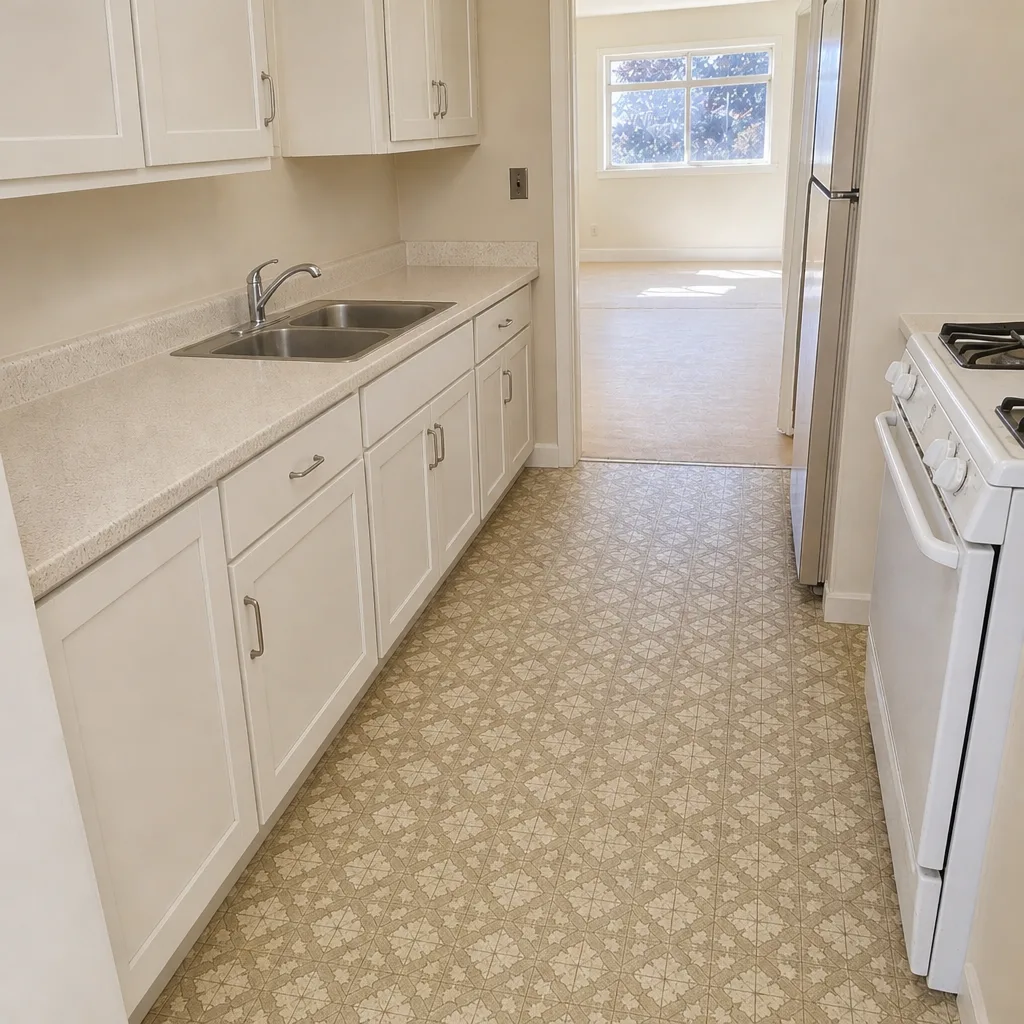
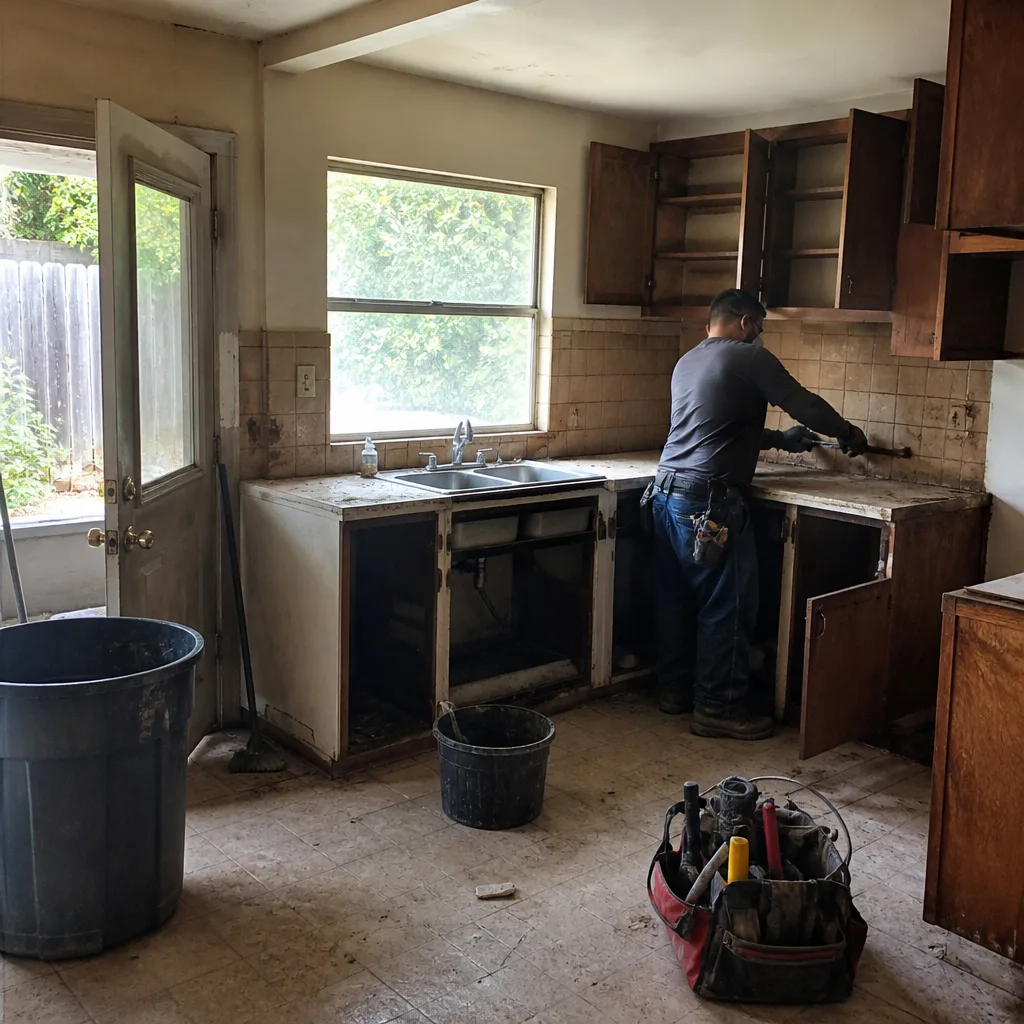
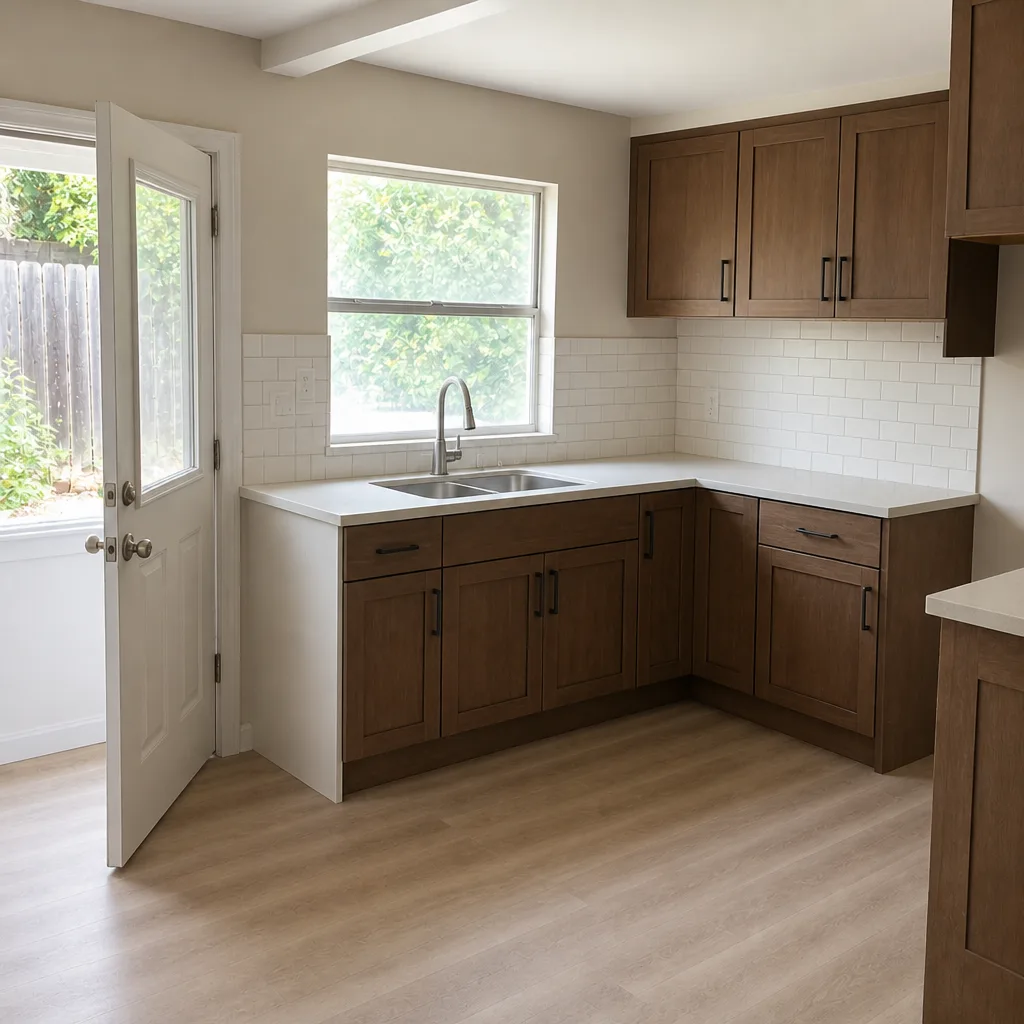
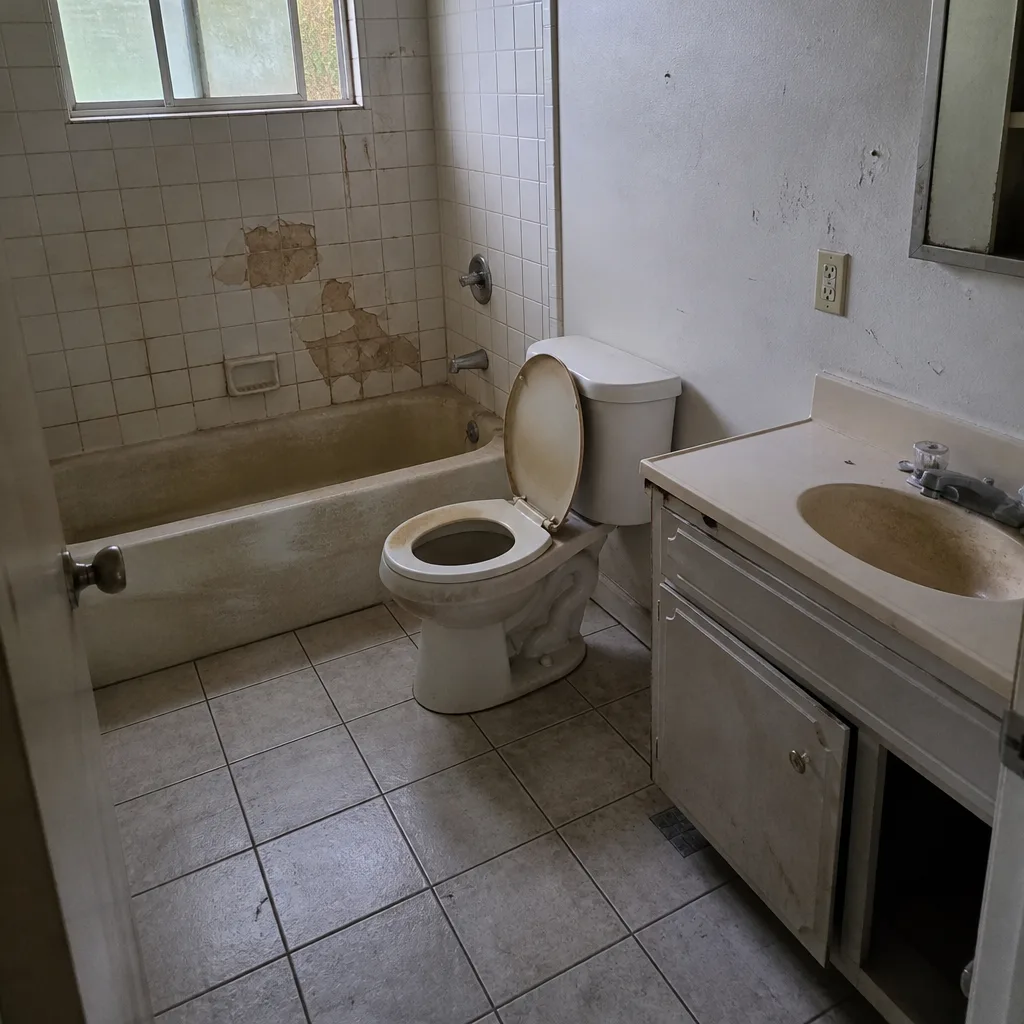
See the difference
 Before
 After
 Before
 After
 Before
 After
When to Call a Professional
Some warning signs are homeowner monitoring items, and some are call-now items. Call a professional when any of these is true: a diagonal or stair-step crack is wider than a quarter inch or has grown since you first noticed it; a horizontal crack appears in a foundation wall with any bowing; water is reaching the interior of the home from the roof; wood trim or siding is soft to the touch; doors and windows have gone noticeably out of square in a short period; the same drywall or tile repair has failed twice in the same place; or you notice an electrical panel that is warm, buzzing, or tripping more often. Those aren’t finish problems, and patching them wastes money. Construction Vallejo offers free estimates in Vallejo, and the walkthrough includes a look at the whole property so we can tell you which pattern is driving the rest. Call (844) 684-1772. We answer 24/7. Fast dispatch from 7am to 7pm, Sunday through Friday.
Frequently Asked Questions

Look at the pattern before the width. Vertical cracks in a slab or foundation are usually shrinkage or ordinary settling and can be monitored. Diagonal cracks that fan from the corner of a window or door, stair-step cracks in masonry, or any horizontal crack in a foundation wall are the structural patterns that need a professional look. Test the two sides of the crack for a vertical offset – even a sixteenth of an inch of difference is a signal, not a cosmetic issue. Photograph and date every crack so you can compare in 60 days. If it’s growing, call (844) 684-1772 for a free estimate.
A brown ring on a ceiling usually means a slow, chronic roof or plumbing leak rather than a single sudden failure. Water has reached the drywall repeatedly, been absorbed, and dried, leaving a tide line at the edge of the wet area. The exact location tells you where to look: ceiling field stains point at shingles or underlayment, while stains along a wall, chimney, or roof-plane intersection point at flashing. Get into the attic after the first rain and check the decking and penetrations for staining. Roof stains are worth a professional look before the next wet season – call (844) 684-1772 for a free estimate.
Usually not. Edge lifting in a Vallejo driveway is almost always a base or edge-restraint problem, not a paver problem. Re-setting the same pavers over the same failing base will look right for one season and then fail again in the same place. The useful question is what’s happening underneath – is the edge restraint holding, is water draining away, and is the base compacted and stable? If the whole driveway is failing in one pattern, that pattern is telling you the base needs to be rebuilt before a new surface goes down. Call (844) 684-1772 and we’ll walk the property and look at the whole system.
Paint peeling in a consistent band is a moisture signal, not a prep problem. On a Vallejo wood-frame home it usually means water is getting in at a window or door flashing, a trim joint, or a housewrap lap, and the wall can’t dry out. Repainting without finding the source usually fails in the next wet season. A moisture meter reading that’s 8 to 10 points above a dry spot on the same wall is a strong clue. Once the moisture source is fixed, the siding and paint can be addressed. Call (844) 684-1772 for a free estimate on locating the source.
Repairs often don’t require one, but replacements and any structural work frequently do, and the rules depend on the scope of the work, not the name you give it. When in doubt, ask the City of Vallejo’s building department what your specific scope requires, or ask the contractor doing the estimate. Any contractor who pulls permits and passes inspections is a better partner for this kind of work than one who talks you out of them. Call (844) 684-1772 for a free estimate and we’ll walk you through what’s typically required.
Always start with water and drainage: gutters, downspouts, grading, and roof flashing. Movement and finish follow. In Vallejo’s clay soils, a crack that widens after heavy rain is usually a drainage problem, and a door that starts sticking in the same window is usually the same problem. Hands off the interior finish – tile, drywall, paint – until the water and movement are controlled. One contractor for the whole sequence avoids the classic failure where fresh paint and trim are undone by a leak that was never fixed. Call (844) 684-1772 for a free estimate on the whole property.
The Bottom Line
Premature failure is almost always a warning sign that was visible months before it happened. In Vallejo, the two things that drive most of these patterns are expansive clay soils and concentrated seasonal rain. That combination makes the pattern of a crack, a stain, or a moving driveway more important than the size of any one symptom. Monitor before you patch. Fix water and drainage before finish work. Match the trade to the cause. When the pattern says something is moving, don’t repaint over it. Construction Vallejo works with brand tiers across every category – from GAF, CertainTeed, and Owens Corning roofing to Belgard, Unilock, and Techo-Bloc hardscape – because matching the material to the cause is a large part of getting the fix to last. Whether you’re facing a single warning sign or three at once, call (844) 684-1772 for a free estimate. We answer 24/7. Fast dispatch from 7am to 7pm, Sunday through Friday.
Written by the team at Construction Vallejo.