Last updated November 18, 2026



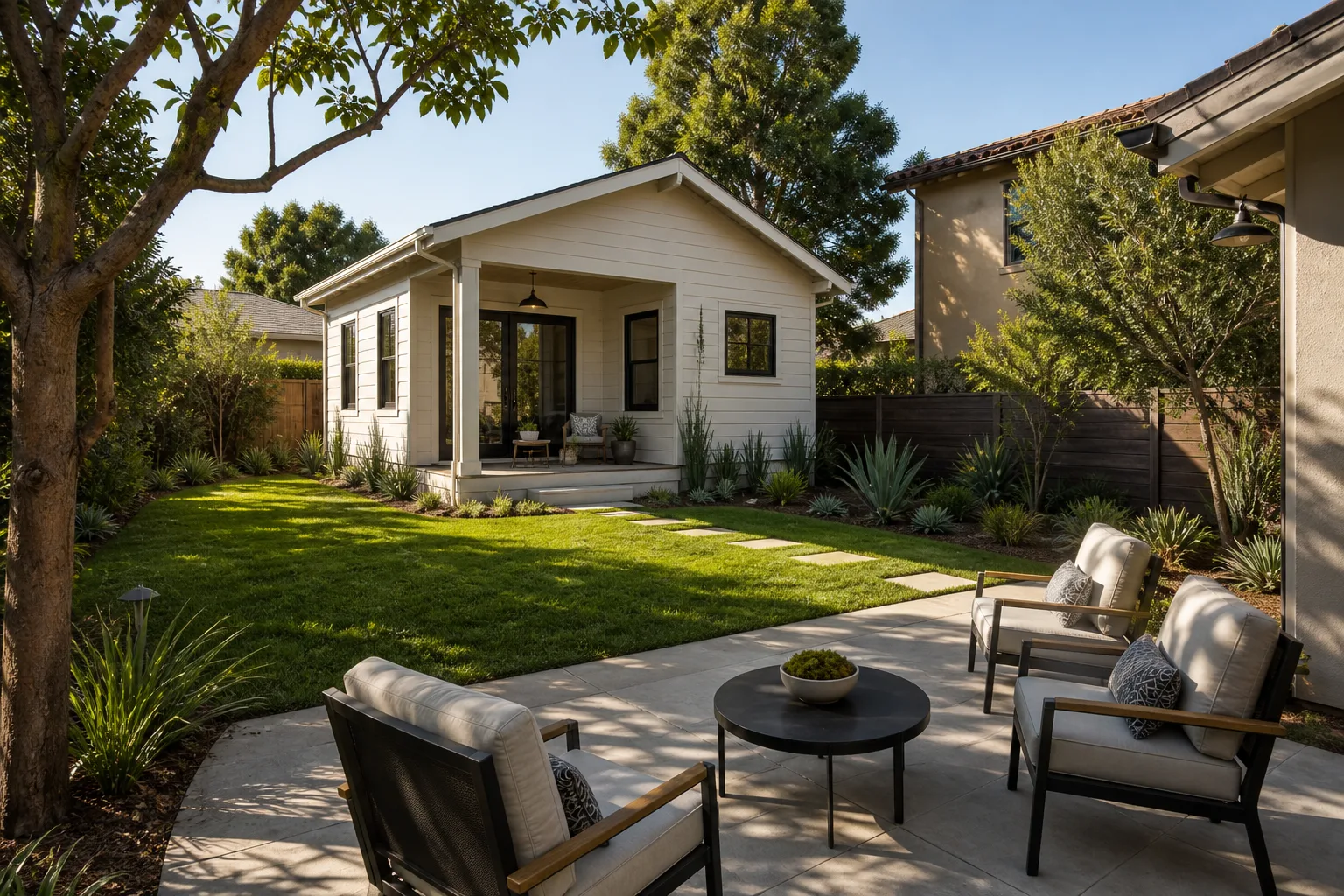
Free written scope consultation - allowances, timeline, and change-order rules on paper before a single trade is scheduled
The Complete Driveway & Pavers Guide for Vallejo Homeowners
Most Vallejo driveways don’t fail at the surface. They fail six inches below it, in the base layer nobody thought hard about. Expansive clay soil runs through large swaths of Solano County, and it moves with the seasons. A paver driveway that ignores that reality can look perfect on install day and turn into a rolling, rutted mess within a few years. This guide treats your driveway as a site-specific engineering decision, not a shopping trip through a paver catalog. We’ll cover base depth, joint sand, slope, paver format, and the stormwater rules Vallejo enforces, so you can plan a driveway that stays flat and tight for the long haul.
Quick Answer
A paver driveway in Vallejo needs a deeper, better-compacted base than generic guides recommend, because the expansive clay soil under much of the city swells and shrinks with moisture. Expect a properly built driveway to include an excavated subgrade, a geotextile separator, a compacted aggregate base, edge restraint, and polymeric joint sand chosen for a mild, foggy climate. Skipping any of those layers is what causes the settlement and joint failure you see on older Vallejo driveways.
Styles & brands we work with
- Kitchen remodeling
- Bathroom remodeling
- Home additions & ADU
- Roofing
- Windows & doors
- Driveway & pavers
- Fence
Table of Contents
- Why Vallejo’s Soil Changes the Whole Build
- Base Depth and Compaction: What Actually Holds Up
- Reading Your Slope Before You Pick a Paver
- Fog, Thermal Cycling, and Joint Sand
- Paver Formats That Suit Vallejo
- Permits, Runoff, and Permeable Options
- What a Paver Driveway Costs in Vallejo
- Choosing Materials and a Contractor
Why Vallejo’s Soil Changes the Whole Build
Vallejo sits on ground that includes expansive clay soils, and that single fact reorders the priorities of a driveway project. Clay that holds water swells; clay that dries shrinks. When that movement happens under a driveway, it pushes and pulls at whatever sits on top. A thin base laid directly over native soil gives that movement nowhere to go but up into your pavers.
Generic paver guides are usually written for sandy or gravelly soils where drainage is generous and movement is minimal. Those guides often call for a base compacted in lifts with a plate compactor and that’s it. In Vallejo, that approach is a gamble.
What good site work looks like here:
- Excavate to the right depth. The base has to be thick enough to spread load and isolate the pavers from subgrade movement. That depth is set per site after looking at the soil and the traffic the driveway carries.
- Use a geotextile separator. A woven fabric between native soil and aggregate keeps fine clay particles from migrating up into the base and weakening it over time.
- Compact in lifts. Aggregate placed in thick single passes doesn’t reach density. Thin lifts, compacted one at a time, do.
- Grade for drainage. Water is what drives clay movement. Getting water off and away from the driveway is half the battle.
- Restrain the edges. Edge restraint is what stops pavers from spreading outward under load. It’s a structural part of the system, not a trim detail.
If you take one thing from this guide, take this: in Vallejo, the invisible work under the pavers matters more than the pavers themselves. We’ve watched driveways with beautiful surface stone fail early because the base was treated as an afterthought. We’ve also seen plainer pavers hold up for years because the base was built properly.
Base Depth and Compaction: What Actually Holds Up
Base depth is the number homeowners ask about first, and it’s the number most online guides get wrong for this region. The honest answer is that it isn’t one number. It depends on your soil, your slope, the load your driveway carries, and how the site drains. What we can tell you is how a base gets built correctly, so you can ask the right questions of anyone who quotes your job.
The sequence matters as much as the material:
- Strip and evaluate. Remove the existing surface, then look at what’s underneath. Soft spots, organic material, or obvious clay pockets get addressed before anything new goes down.
- Shape the subgrade. Grade the native soil so water has somewhere to go. A flat or slightly dished subgrade traps moisture.
- Lay the separator fabric. This keeps the aggregate base clean and stops clay fines from pumping upward.
- Place aggregate in lifts. Each lift gets compacted before the next one goes on. Skipping this step is the most common shortcut, and it’s invisible once the pavers are down.
- Check grade and density. The finished base should be flat, firm, and pitched correctly toward drainage.
- Set edge restraint. Concrete or spiked edge restraint holds the whole system together at the perimeter.
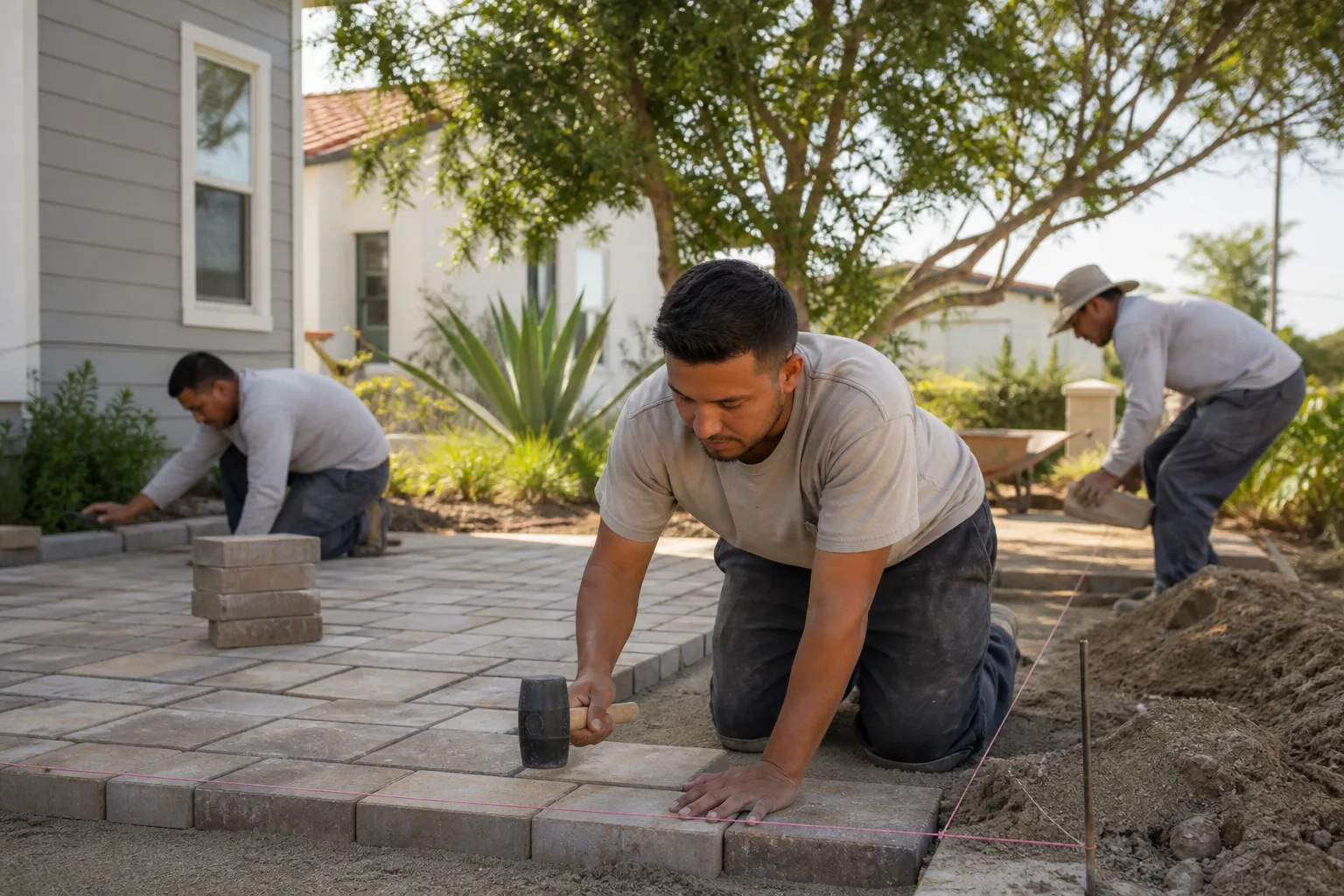
- Lay the bedding layer and pavers. A thin, screeded bedding course, then the pavers in the pattern you’ve chosen.
- Compact and sand the joints. A final pass with a plate compactor settles the pavers into the bedding, then joint sand goes in.
Ask any contractor how they handle base preparation on clay. If the answer is vague, or if they skip the separator fabric and lift compaction, that tells you a lot about the driveway you’ll get.
Reading Your Slope Before You Pick a Paver
Before you choose a paver, look at how your current driveway sits relative to your garage slab and the street. Slope is a drainage decision, and in Vallejo it’s also a movement decision. Water that pools against the garage slab or can’t escape to the street will find its way into the base and the soil beneath it.
A few things to check on your existing driveway:
- Does water pool anywhere? Look for staining, algae, or soft spots after rain. Those are clues about where the grade fails.
- Is the garage slab above or below the driveway? The driveway should pitch away from the garage, not toward it. A driveway that drains into the garage is a problem regardless of what it’s made of.
- Where does water leave the property? It should run toward the street or a drainage feature, not into a neighbor’s yard or against the house.
- Are there low spots in the middle of the drive? A dip in the middle collects water and accelerates settlement.
Paver thickness and format interact with slope. Thicker, larger-format pavers resist tipping and rocking better on a sloped drive, especially where vehicles turn or brake. Smaller, thinner units can work beautifully on a flat, well-drained drive but need more careful restraint on a grade. The slope tells you what the driveway needs; the paver selection follows from that.
If your existing driveway pitches toward the house, or if water has been pooling against the garage for years, that’s worth fixing as part of a full replacement rather than paving over. A paver driveway is only as good as the grade under it.
Fog, Thermal Cycling, and Joint Sand
Vallejo’s marine fog and daily temperature swings do something to a driveway that dry, stable climates don’t: they work the joints. Moisture gets into the joint sand, temperatures shift, and the sand loosens or washes out. Once joints open up, water reaches the base, and the base is where problems start. Joint sand choice is not a cosmetic decision here. It’s part of the drainage and stability system.
Polymeric sand is the standard choice for a reason, but not all polymeric sand performs the same in a foggy, moisture-cycling climate. The differences that matter:
- How it cures. Some polymeric sands cure hard and resist washout well. Others stay softer and need more maintenance in wet conditions.
- How it handles moisture during installation. In a humid climate, the activation and curing window matters. Getting the sand properly set is a technique question as much as a product question.
- How it ages. Polymeric sand breaks down over time, and in a climate with regular fog and temperature swings, it needs periodic re-sanding as part of normal maintenance.
If a contractor tells you joint sand choice doesn’t matter, that’s a signal. In Vallejo, it matters. So does the timing of the install. Laying pavers and activating polymeric sand in foggy, damp conditions requires the right technique, and that technique is different from what works in a dry climate.
The climate also affects how you maintain the driveway after it’s built. Periodic joint sand checks, especially after wet winters, keep the driveway tight. A driveway that gets re-sanded when needed will hold up far longer than one that doesn’t.
Paver Formats That Suit Vallejo
Once the base, slope, and joint sand are planned, paver format becomes a design and durability question. Vallejo’s mild but variable temperatures, with cool, foggy stretches and warmer inland swings, mean pavers here need to handle moisture and moderate thermal cycling without cracking, spalling, or shifting. Not every format does that equally well.
Here’s how the main formats tend to perform:
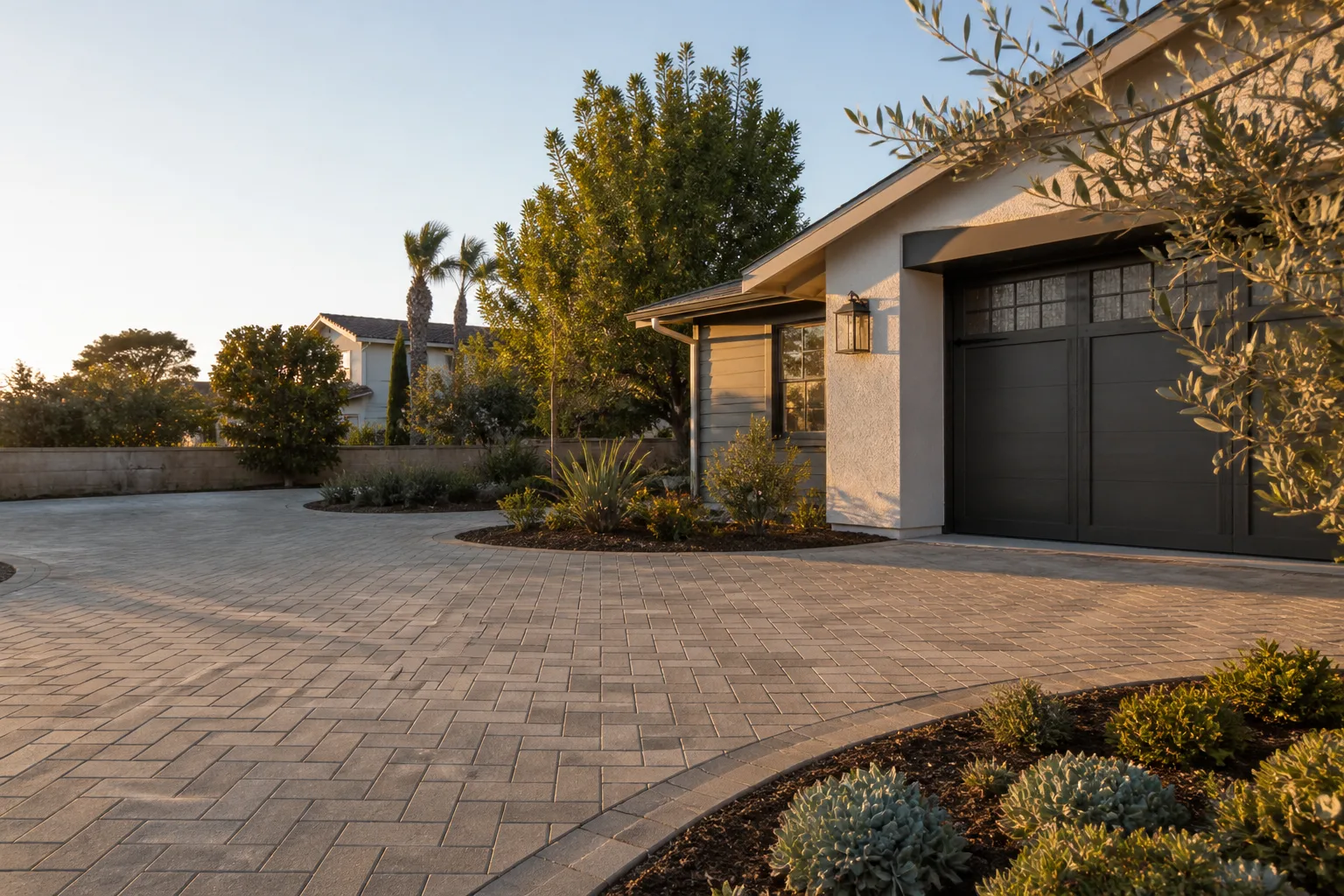
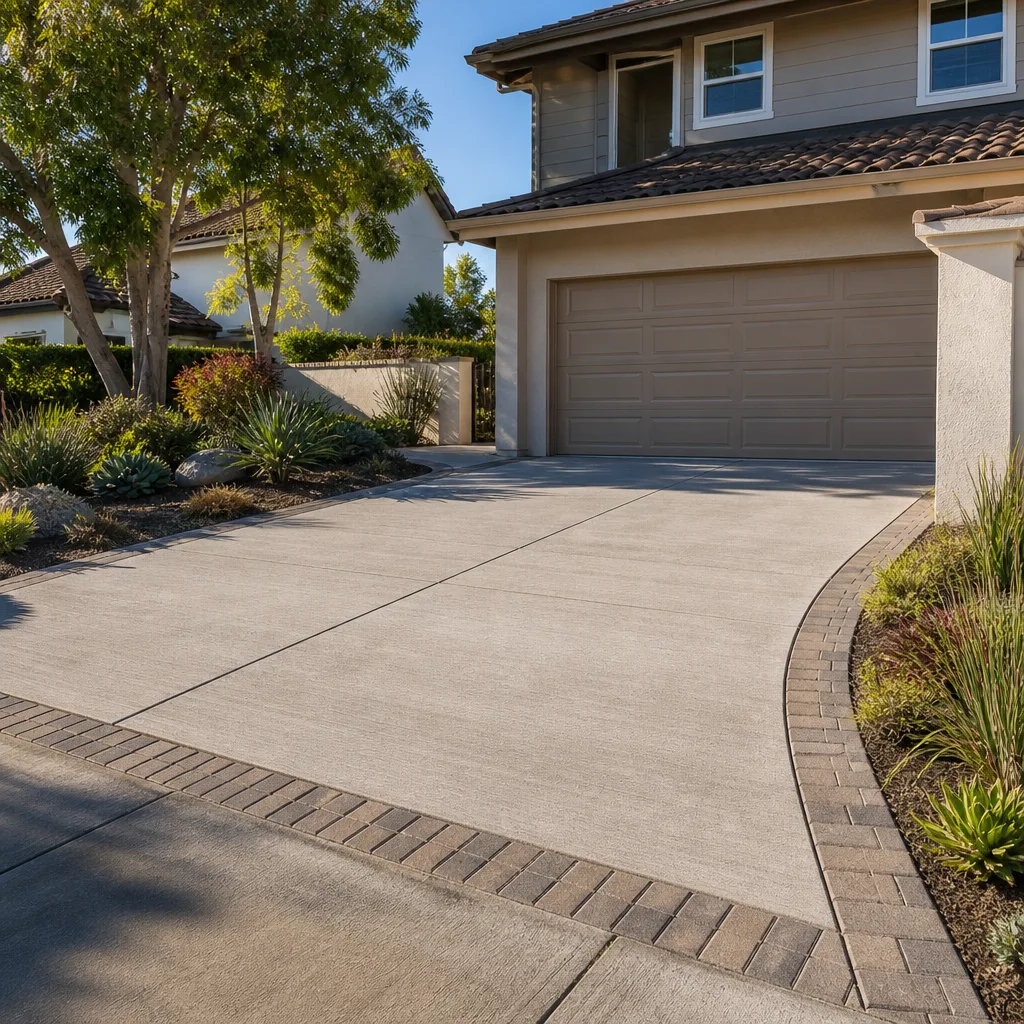
- Tumbled pavers. The slightly irregular surface and softened edges help joints lock together, and they hide minor settling better than crisp-edged formats. They suit Vallejo’s climate well because the surface handles moisture and movement gracefully.
- Architectural or straight-edge pavers. Clean lines and a tighter look. They perform well when the base is solid; on a weaker base, crisp joints show movement more readily.
- Interlocking pavers. Designed so units lock against each other, spreading load across the driveway rather than concentrating it. Good where vehicles turn or where the drive is sloped.
- Slab-style pavers. Large-format units that give a modern look. They can work very well on a flat, well-drained driveway but need careful base support and edge restraint. On a sloped drive, their weight and format require extra attention to settlement.
The freeze-thaw range Vallejo actually sees is mild compared with inland or mountain climates, which is good news for paver longevity. But mild does not mean no movement. Moisture still works its way into joints, and temperatures still shift. Choosing a format that tolerates that movement, and pairing it with a good base, is what separates a driveway that lasts from one that needs re-leveling in a couple of years.
Permits, Runoff, and Permeable Options
Vallejo, like most California cities, has rules about how much impervious surface you add to a property and how stormwater runs off it. A driveway is impermeable surface by default, so a full replacement or new driveway can trigger a permit and runoff review. The specific requirements depend on your property and the city’s current rules, so the first step is to check with the city’s building department before you buy a single paver.
Permeable pavers can simplify that process. Instead of sending all the runoff to the street, a permeable system lets water pass through joints and base into the ground. On a lot with limited drainage or a tight relationship to the street and neighboring properties, that can make a difference both in what the city requires and in how the driveway behaves during a wet winter. Permeable systems need a base designed for water storage and infiltration, so they change the base design, not just the surface.
What to sort out early:
- Confirm with the city whether your driveway project needs a permit and what the runoff requirements are for your lot.
- Determine whether your property drains well enough for a permeable system, or whether a conventional system with proper grading is a better fit.
- Plan the base design around that decision before pricing the pavers.
- Have the contractor pull the permit and handle inspections so the work passes and the job stays on track.
Permits and inspections are part of the project we handle. Getting runoff right before construction starts saves the friction of discovering a problem after the driveway is in.
What a Paver Driveway Costs in Vallejo
Cost is the question every homeowner asks, and the honest answer is that a driveway is sized in square feet, so no single number fits everyone. What we can do is give you a clear way to think about where the money goes, so a quote makes sense when you see it. The ranges below are typical estimates; the written estimate sets the final price after a site visit.
- Base preparation and excavation: the invisible work. Deeper base requirements on clay soil cost more than the same square footage on sandy ground.
- Paver material: price per square foot varies by format and manufacturer. Tumbled and architectural pavers sit in different tiers, and larger-format slabs cost more.
- Edge restraint and bedding materials: the layers that hold everything together.
- Joint sand: polymeric sand chosen for the climate, plus the labor to install and compact it correctly.
- Permit and inspection costs: set by the city and the scope of the job.
- Site-specific work: drainage corrections, removal of an old driveway, or fixing a grade that pitches toward the house all add to the scope.
Beware of a quote that prices only the surface. If the base, restraint, and drainage aren’t itemized, the driveway you’re buying may not include them. A written line-item quote that shows each layer and material is what you want, and it’s what makes it possible to compare one bid against another fairly.
The other cost consideration is timing. A driveway that’s built right the first time costs less over the long run than one that needs re-leveling or re-sanding every couple of years. We specify pavers from established manufacturers, including Belgard, Unilock, Techo-Bloc, Tremron, and Cambridge Pavers, because the material quality is part of what makes the driveway hold up.
Choosing Materials and a Contractor
The materials and the contractor decide how your driveway turns out. On the material side, the paver manufacturer matters. Name-brand pavers from established manufacturers, including Belgard, Unilock, Techo-Bloc, Tremron, and Cambridge Pavers, give you consistent dimensions, reliable color, and a product that’s been engineered for performance. Commodity pavers from unknown sources are where cracking and color inconsistency tend to show up.
On the contractor side, the questions that matter are about method, not sales pitch:
- How deep is the base, and why? A contractor who can explain base depth relative to your soil and slope is one who has built driveways here before.
- Do you use a geotextile separator? If they don’t know what it is, that’s a red flag for a clay-soil property.
- How do you handle joint sand? The answer should reflect the climate, not a generic product recommendation.
- Will you pull the permit and handle inspections? The answer should be yes.
- Is the quote written and itemized? Surface-only pricing hides work that needs to happen.
This is also where a full-property partner helps. A driveway project is often the moment a homeowner notices the fence, the roofing, or a planned home additions & ADU project that needs the same kind of site-specific planning. Working with one contractor across the full scope means those projects share a plan, a schedule, and a standard. When the work touches the garage or the side yard, siding and trim choices from James Hardie can keep the exterior consistent, and storage or utility structures from names like Tuff Shed fit into the same plan.
Construction Vallejo works across the full property, from the driveway & pavers to the rooftop, so the driveway isn’t a standalone job that ignores everything around it. If you’re also planning a fence installation or a home additions & ADU project, the site planning can happen together. And if the interior is next on your list, cabinetry from KraftMaid and Wellborn can be specified in the same relationship.
Common Mistakes to Avoid
- Pricing the pavers and forgetting the base. The surface is the visible part; the base is what keeps it flat. A quote that only itemizes pavers is incomplete for a Vallejo property on clay soil.
- Skipping the geotextile separator. Without it, fine clay particles migrate into the base and weaken it over time. It’s an inexpensive addition that prevents an expensive problem.
- Compacting in one thick pass. Proper density comes from thin lifts, compacted one at a time. A single deep pass feels efficient and leaves a soft base underneath.
- Ignoring the slope toward the garage. A driveway that pitches toward the garage sends water where you don’t want it. Fix the grade as part of the project, not after the first wet winter.
- Using the wrong joint sand for a foggy climate. Polymeric sand choice matters in Vallejo. A product that works in a dry climate may not cure or hold the same way here.
- Overlooking the permit and runoff requirements. Vallejo has rules about impervious surface and stormwater. Checking with the building department first keeps the project from stalling mid-build.
- Choosing a large-format slab on a weak base. Slab-style pavers look sharp, but on a drive that isn’t properly supported they show settlement faster than smaller interlocking formats.
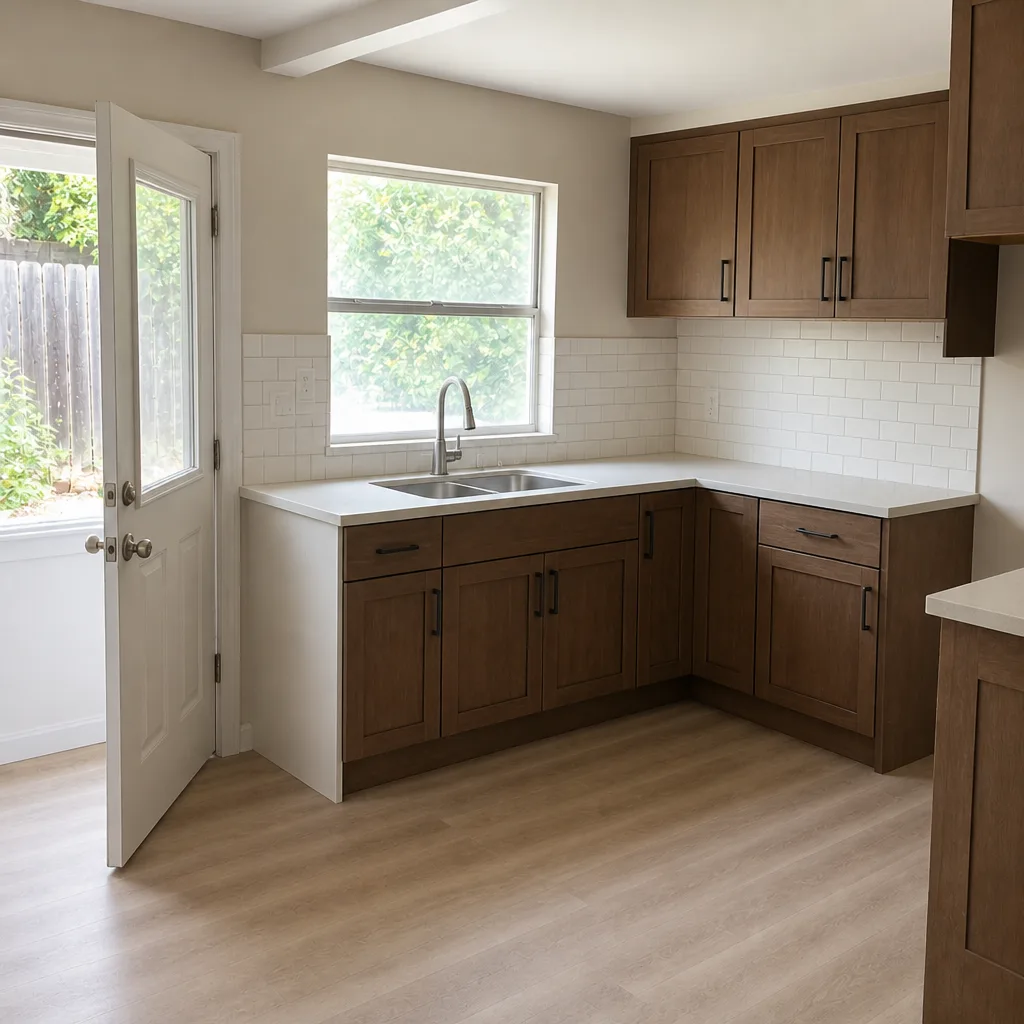
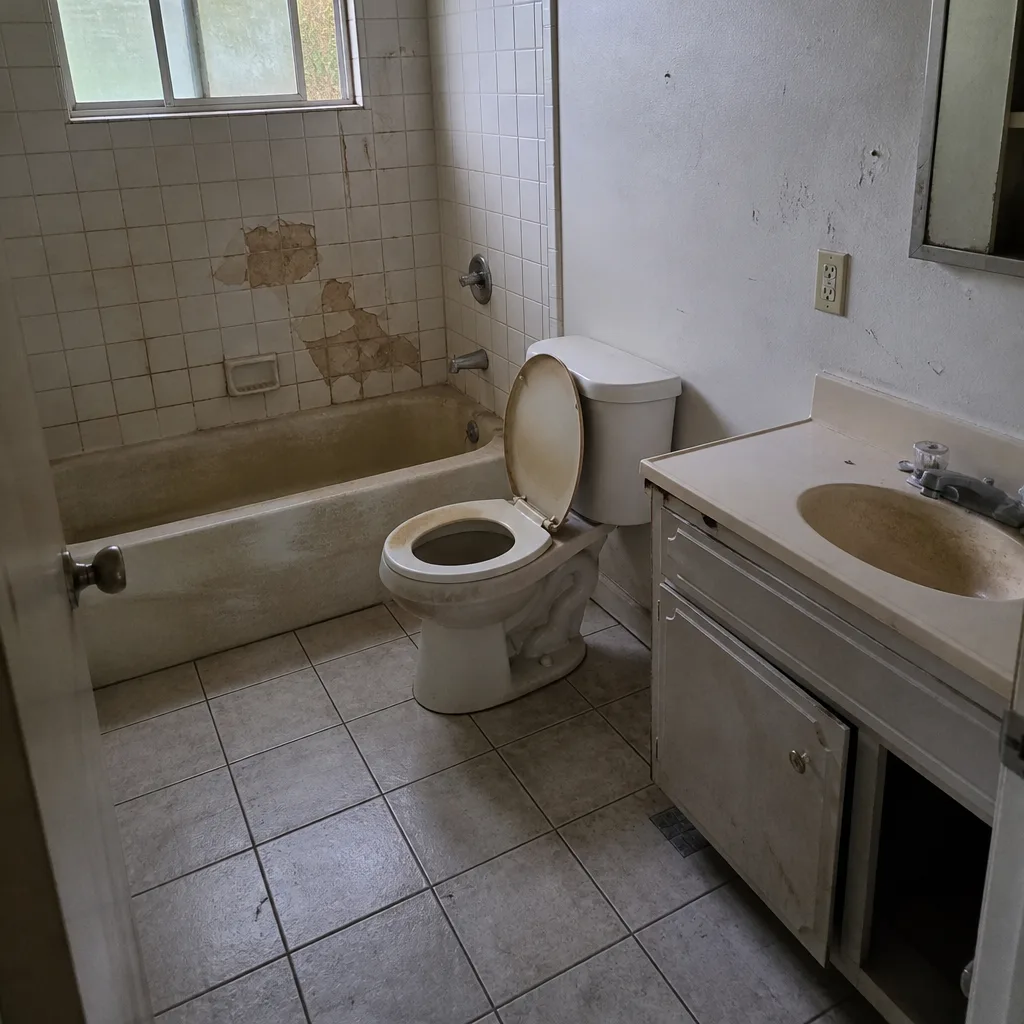
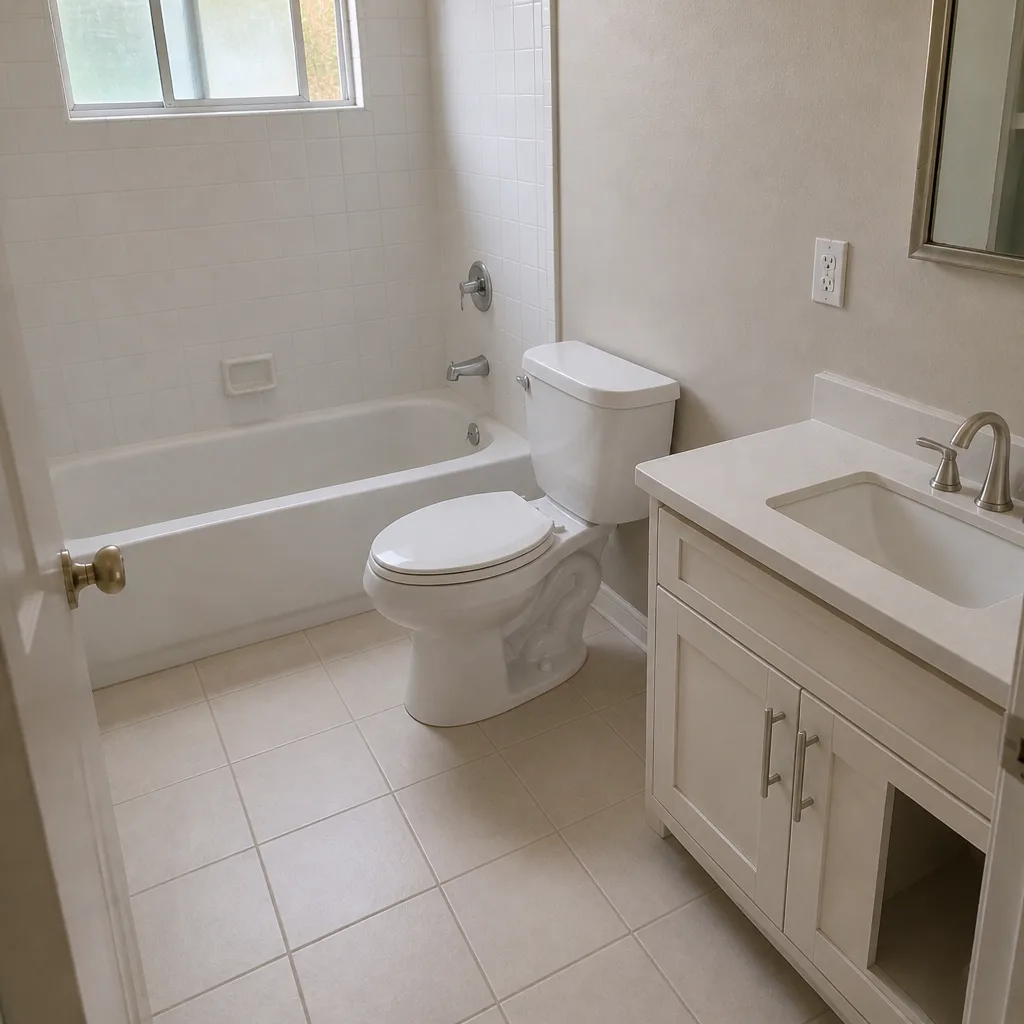
See the difference
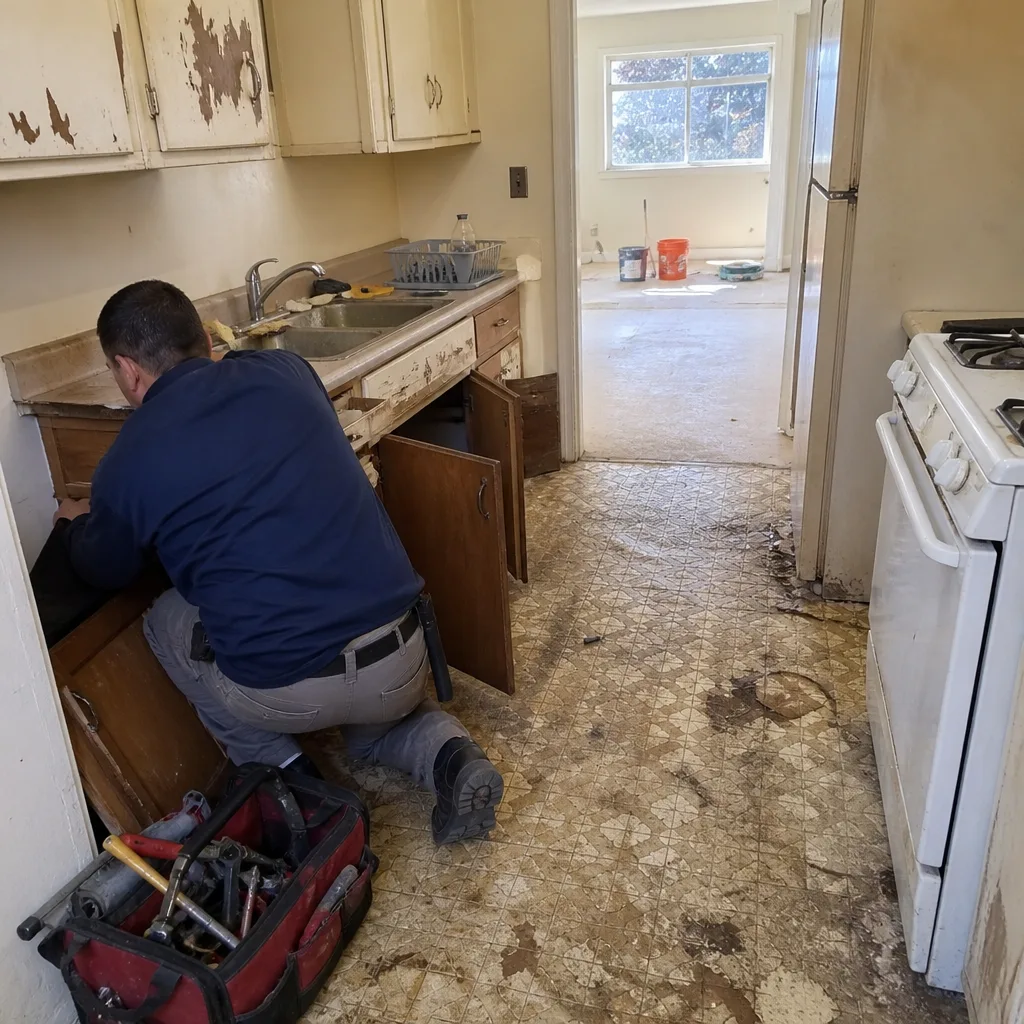 Before
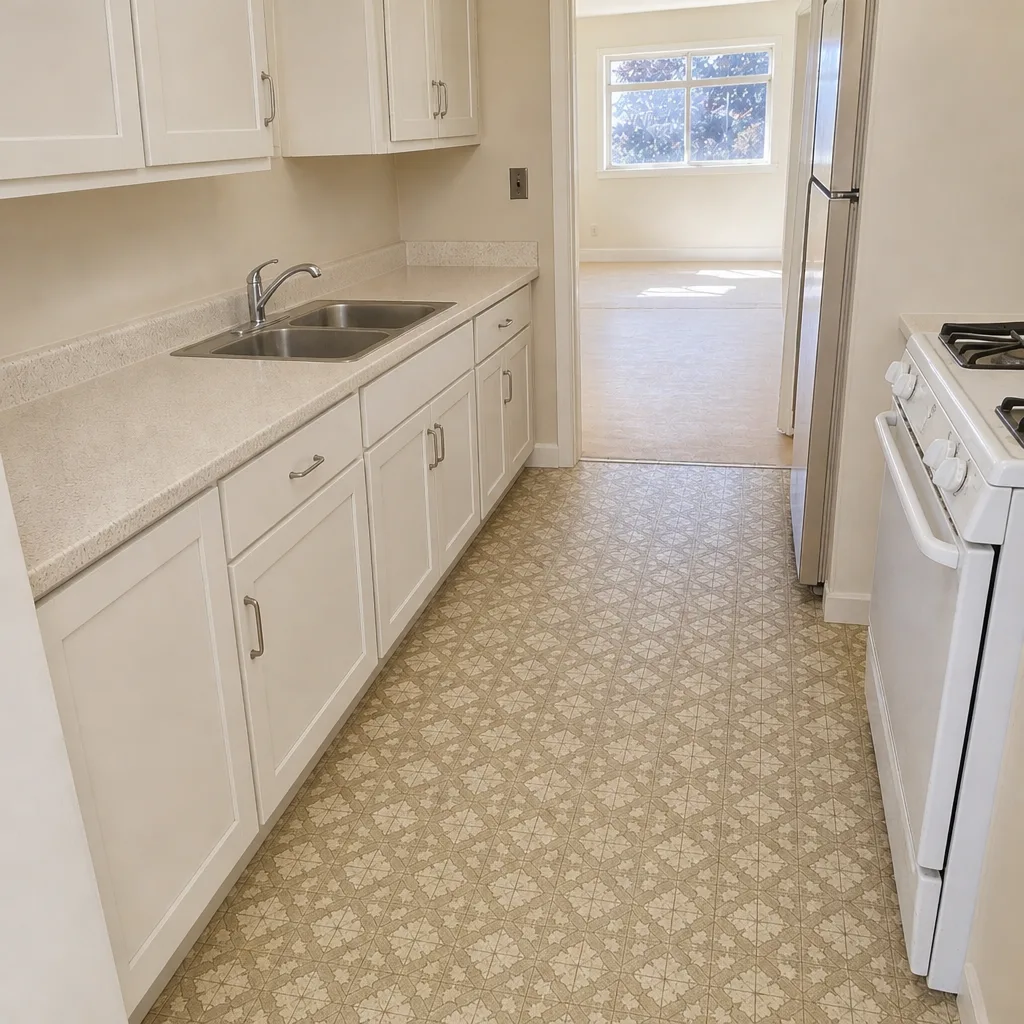 After
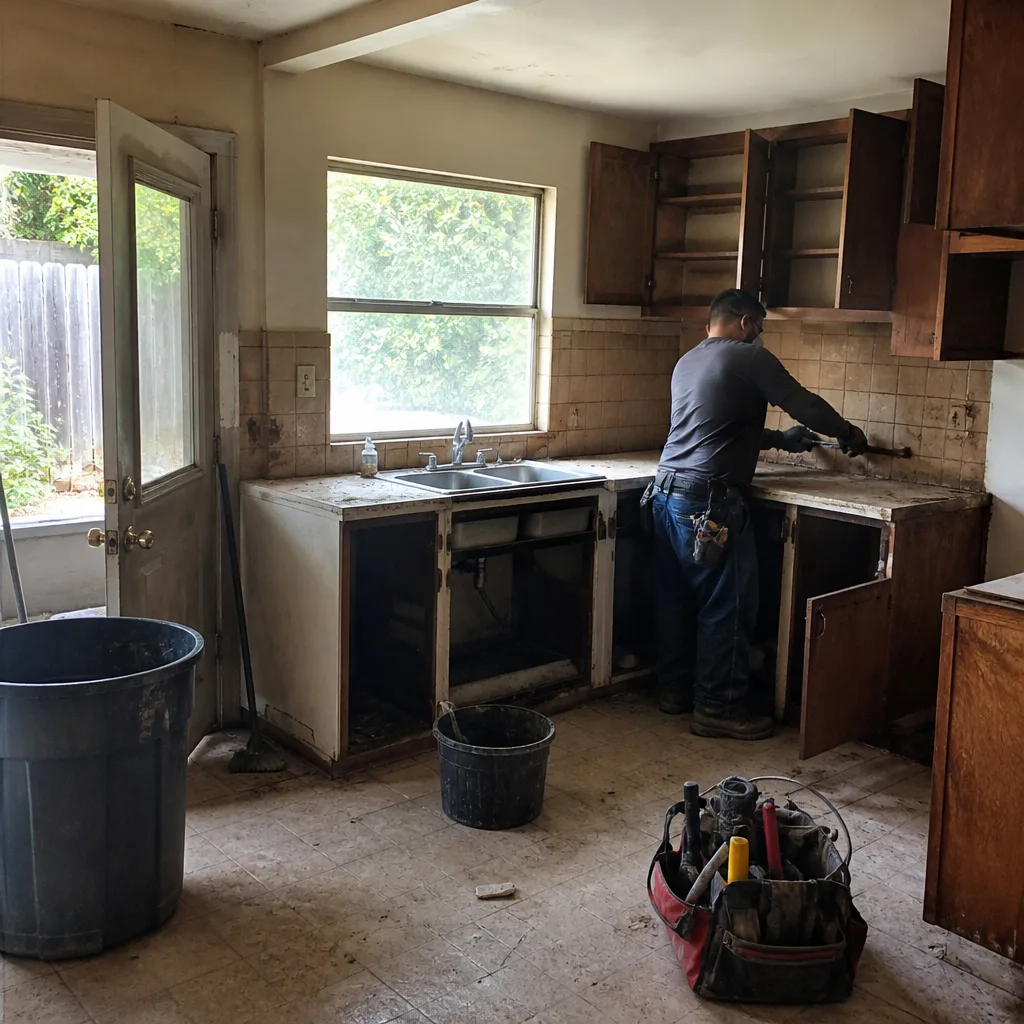 Before
 After
 Before
 After
When to Call a Professional
Some driveway problems are worth a conversation with a professional. If your existing driveway has settled, if water pools against the garage or in the middle of the drive, if the joints have washed out and keep washing out, or if you’re planning a full replacement and want the base, slope, and permit handled correctly, it’s time to get an estimate. The same goes for any project where a new driveway is part of a larger plan, like a garage or side-yard addition. Construction Vallejo offers free estimates in Vallejo. Call (844) 684-1772. We answer 24/7. Fast dispatch from 7am to 7pm, Sunday through Friday. Our technicians have up to 15 years of experience, and every estimate is written and itemized so you can compare it against other bids.
Frequently Asked Questions
The right base depth depends on your soil, slope, and the traffic the driveway carries, but on Vallejo’s expansive clay soils it should be deeper than the generic guides suggest. A properly built base includes a geotextile separator, aggregate placed in compacted lifts, and edge restraint. Ask any contractor to explain their base method before you compare prices.
Often, yes, because a driveway adds impervious surface and the city reviews stormwater runoff. The specific requirements depend on your lot and current city rules, so check with Vallejo’s building department before you start. A permeable paver system can sometimes simplify that review by letting water infiltrate on-site.
Tumbled and interlocking pavers tend to perform well because their joints lock together and tolerate minor movement. Large-format slab pavers can work well on a flat, well-drained drive but need careful base support. Vallejo’s mild freeze-thaw range is easier on pavers than colder climates, but moisture and thermal cycling still work the joints, so format and base design go together.
A paver driveway is priced per square foot after a site visit, because the base work, drainage corrections, and permit requirements vary by lot. A written line-item estimate will break out base preparation, material, edge restraint, joint sand, and permit costs so the final price is clear. Call (844) 684-1772 for an exact quote; estimates are free.
Vallejo’s marine fog and daily temperature swings work moisture into the joints. Polymeric sand that’s chosen and installed for this climate keeps joints tight and water out of the base. The wrong product, or the wrong installation technique in damp conditions, leads to washout and a driveway that loosens up sooner.
Yes. Construction Vallejo works across the full property, from the driveway & pavers to the fence, roofing, windows, and doors, so the site planning is coordinated. For a fence installation or a larger home additions & ADU project, that single-source approach keeps the work consistent. Call (844) 684-1772 to schedule a free estimate. We answer 24/7. Fast dispatch from 7am to 7pm, Sunday through Friday.
The Bottom Line
A paver driveway in Vallejo is a site-specific engineering decision, not a material purchase. The base depth, geotextile separator, compaction, slope, and joint sand are what determine whether the driveway looks the same in five years as it does on install day. Expansive clay soils under much of Solano County make that invisible work more important here than in most places. Choose pavers from established manufacturers, ask contractors the hard questions about base preparation, check the permit and runoff rules early, and get a written, itemized estimate. Done right, a paver driveway is one of the longest-lasting improvements you can make to a property.
If you’re ready to plan a driveway or a full property project, Construction Vallejo is a single-source contractor for driveways, fences, roofing, windows, doors, kitchens, baths, and additions. Call (844) 684-1772 for a free estimate. We answer 24/7. Fast dispatch from 7am to 7pm, Sunday through Friday.
Written by the team at Construction Vallejo.